How to Build a Productive Home Office Setup in 2025: A Complete Guide for Focus, Comfort, and Efficiency
Building a productive home office setup in 2025 is no longer a luxury; it has become a necessity for anyone who works, studies, creates content, or manages a business from home. The home has transformed into a digital workplace, and as the boundaries between work and personal life become thinner, the importance of designing a workspace that supports focus and efficiency becomes greater. A productive home office setup is not defined by how expensive your desk or chair is—it’s defined by the harmony between the physical environment, the psychology of focus, and the tools you use every day.
In this long-form guide, we will explore every aspect of building a productive home office setup. From choosing the right location, to lighting, ergonomics, psychological triggers, digital organization, and the subtle elements that quietly increase your productivity without you even noticing. This article aims to give you not just ideas, but a deeper understanding of why certain workspace choices matter and how you can transform any corner of your home into a powerful working environment.
A productive home office setup influences your mood, your attention span, your motivation, and your ability to stay consistent. When your environment is designed with intention, everything else becomes easier. You focus faster. You stay organized longer. You waste less time looking for things. You feel calmer, more motivated, and more aligned with your goals. And with the rise of remote work, freelancing, and digital entrepreneurship, optimizing your workspace is one of the smartest decisions you can make.
Why Building a Productive Home Office Setup Matters in 2025
The modern world has changed drastically. Remote work is now a permanent part of global work culture, and flexible schedules are replacing the traditional nine-to-five. With these changes comes the responsibility of creating a space that supports your daily tasks without draining your energy or overwhelming your mind. A productive home office setup gives you control over your environment—something traditional offices never allowed.
In 2025, the biggest threats to productivity are digital distractions, mental fatigue, and environmental stress. A cluttered space increases anxiety. Poor lighting drains your energy. An uncomfortable chair ruins your posture and shortens your focus. Slow internet disrupts your workflow. All these small frustrations add up and reduce your overall performance. A productive home office setup eliminates these obstacles so you can concentrate on the work that matters.
Another reason your home office matters is psychological separation. When your workspace is defined and consistent, your brain learns when to “switch on” and when to relax. This mental boundary improves your focus and protects your personal life from work stress. Without it, you end up working everywhere—on the bed, the couch, the floor—and your mind never feels fully at rest. Designing a productive home office setup creates that essential balance.

Choosing the Right Location for Your Productive Home Office Setup
The first step in building a productive home office setup is selecting the right space. This decision influences everything else. The ideal location is a quiet, dedicated area where you can control noise, lighting, and distractions. Even if you live in a small apartment, there is always a corner or a spare area you can convert.
Try to avoid working in places associated with relaxation, such as your bed or couch. These places make your brain confused—your mind wants to relax, but your tasks demand focus. A productive home office setup must be a place your brain associates with work. A small desk near a window, a corner in your bedroom, or a section of your dining room can become an efficient workspace if designed well.
A crucial part of choosing the right location is distance from noise. If you live with family or roommates, select a place where you can shut the door or limit foot traffic. A productive home office setup must protect your concentration as much as possible. Once you choose the space, stick to it. Routine builds productivity.
Lighting: The Secret Ingredient of a Productive Home Office Setup
Lighting is one of the most powerful yet overlooked factors in productivity. The right lighting keeps you alert, energized, and focused, while poor lighting causes fatigue, irritability, headaches, and eye strain. Natural light is the best source—position your desk near a window if you can. Soft daylight boosts your serotonin levels and helps keep your mind awake.
But natural light isn’t enough, especially if you work at night or in darker rooms. A productive home office setup requires layered lighting: overhead lighting to brighten the room, a desk lamp for focused tasks, and indirect lighting to reduce shadows. Warm LED lights create a calm environment, while cool white lights increase alertness. Finding the right balance depends on your work style, but the goal is the same: create a bright, comfortable environment that supports long hours of focus.
Glare on your screen is a common problem and can be fixed by adjusting angles or using light diffusers. A productive home office setup prioritizes your eyes—it ensures comfort even during long working sessions. When lighting is right, work becomes smoother and more enjoyable.
Ergonomics: The Foundation of a Productive Home Office Setup
If lighting is the secret, ergonomics is the foundation. Ergonomics determines how your body feels while you work, and nothing destroys productivity faster than pain. A productive home office setup must support your posture, your back, your neck, and your wrists.
Your chair should be supportive and adjustable. A chair doesn’t need to be expensive to be ergonomic—it just needs to match the natural curve of your spine. Your feet should rest flat on the floor, and your shoulders should be relaxed. Your desk should be at a height where your arms rest comfortably while typing.
Your screen should be at eye level. This prevents neck strain and improves your breathing posture. Many people place their screens too low, forcing their heads to tilt downwards for hours, leading to discomfort and loss of focus. A simple monitor stand solves this problem instantly.
Ergonomics also includes wrist position. Your wrists should stay straight and relaxed while typing. An ergonomic keyboard or mouse can help, but even adjusting the angle of your desk can make a world of difference. A productive home office setup is all about sustainability—you must be able to work long hours without harming your body.
Desk Layout: Creating Mental Clarity Through Physical Organization
A productive home office setup relies heavily on desk organization. Your desk is the center of your workspace, and it should promote mental clarity rather than clutter. A messy desk increases anxiety and reduces focus because your brain must constantly process visual information.
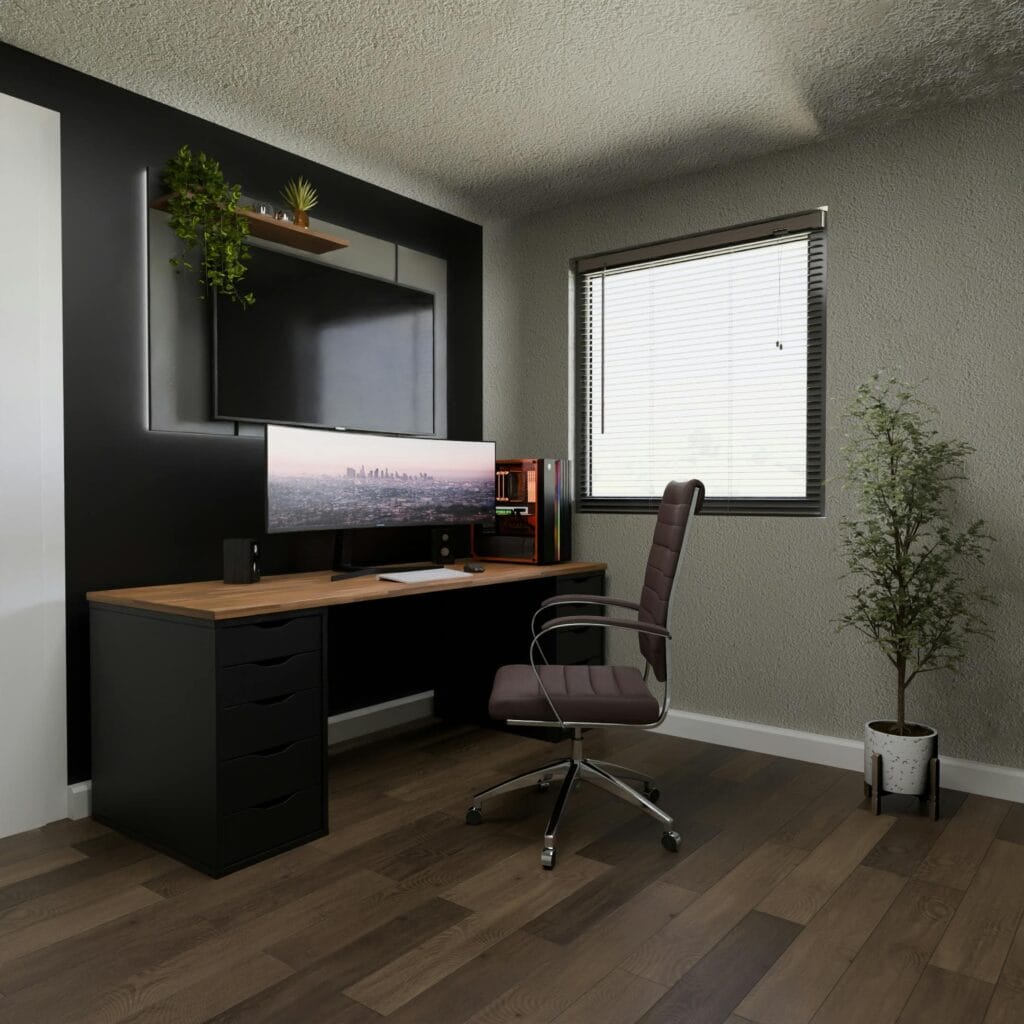
The best desk layout is simple. Keep only the essentials: your monitor, laptop, keyboard, mouse, a notebook, and a lamp. Everything else should be stored in drawers or shelves. Minimalism is not about aesthetics—it’s about reducing mental noise. A clear desk is a clear mind.
Cable management also plays a huge role. Tangled cables look chaotic and subconsciously increase stress. Using cable sleeves, clips, or under-desk trays immediately improves the visual quality of your space. A productive home office setup hides distractions and highlights the tools that matter.
You should also pay attention to desk surface color. Light wood, white, or soft neutral shades promote calmness and focus, while harsh or flashy colors create unnecessary stimulation. The goal is a workspace that feels clean, controlled, and ready for action.
Technology That Enhances a Productive Home Office Setup
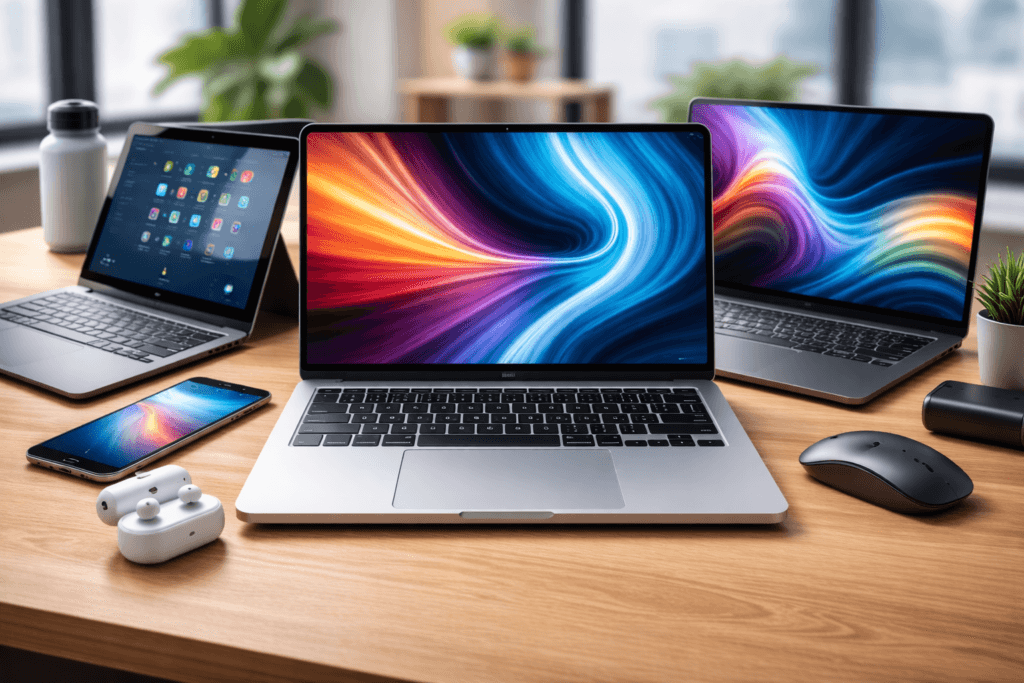
You don’t need the latest or most expensive gadgets—but you do need technology that supports your workflow. A productive home office setup requires strong internet, reliable audio quality, enough screen space, and tools that help you stay organized.
Start with your internet connection. Invest in a stable router or a WiFi extender if your workspace is far from the main modem. Slow internet disrupts your flow and ruins meetings.
Your microphone and webcam matter more than you think. In 2025, most communication happens online. Clear audio improves your presence in meetings and helps you avoid misunderstandings. A productive home office setup always includes reliable communication tools.
External monitors can double your productivity. Even a simple 24-inch 1080p display helps you organize your digital workspace more efficiently. You can research on one screen while writing on another, or keep communication apps open without switching windows.
Productivity software also contributes to a productive home office setup. Cloud storage, note-taking apps, password managers, and project management tools help you stay organized. Technology should make your life easier, not harder. When used wisely, it enhances every part of your workflow.
Personal Comfort and the Psychology of Productivity
A productive home office setup is not only physical—it’s psychological. The way your workspace makes you feel affects your ability to concentrate. Adding small personal touches can transform the atmosphere: a plant, a framed photo, a motivational quote, or a calming scent. These elements don’t distract—they make the space feel welcoming and comfortable.
Color psychology is powerful. Soft neutrals promote calmness. Greens and blues increase focus. Avoid harsh patterns or bright neon colors near your desk. Your mind needs visual peace to perform well.
Sound is another factor. Some people prefer silence, while others focus better with ambient music or nature sounds. Experiment until you discover what activates your concentration without overwhelming your senses.
Scent also influences mood. Lavender reduces stress, peppermint boosts alertness, and citrus scents increase energy. A productive home office setup engages your senses in a way that prepares your mind for deep focus.
Digital Organization: Extending Productivity Beyond the Physical Space
A clean physical workspace isn’t enough—you also need a clean digital environment. A productive home office setup must include organized folders, cloud backups, and clear naming systems. Digital clutter is just as harmful as physical clutter. When your files, documents, and tools are scattered everywhere, your brain experiences micro-stress every time you try to find something.
Create simple file structures. Use clouds like Google Drive or OneDrive. Delete unnecessary screenshots, old downloads, and duplicate files regularly. Organize your email. Sync your notes. When your digital life is clean, your mind becomes more focused and less anxious.
Just as you tidy your desk, you should tidy your digital workspace at least once a week. A productive home office setup exists in both the physical and digital worlds.
Maintaining Your Productive Home Office Setup Over Time
Once you build your workspace, maintaining it becomes a habit. The key is consistency. Spend two minutes every night restoring your desk to a clean state. Rearrange your equipment when needed. Replace items that no longer serve your workflow. Optimization is an ongoing process.
Review your productivity every few weeks. Does your desk make you feel energized or tired? Do you need better lighting? Is your chair causing discomfort? A productive home office setup should evolve with your needs. The goal is not perfection—it’s continuous improvement.
Final Thoughts: Your Home Office Setup Shapes Your Success
A productive home office setup is one of the greatest investments you can make in yourself. It influences your energy, your focus, your creativity, and your overall work quality. In 2025, when digital work has become the new normal, your workspace is your engine. When the environment supports you, your productivity rises naturally.
Building the perfect setup doesn’t require a big budget. It requires intention, awareness, and an understanding of what your mind and body need. When you create a workspace that aligns with your goals, you transform the way you work—and ultimately transform your results.
Your home office is more than a desk and a chair, it is the foundation of your success.